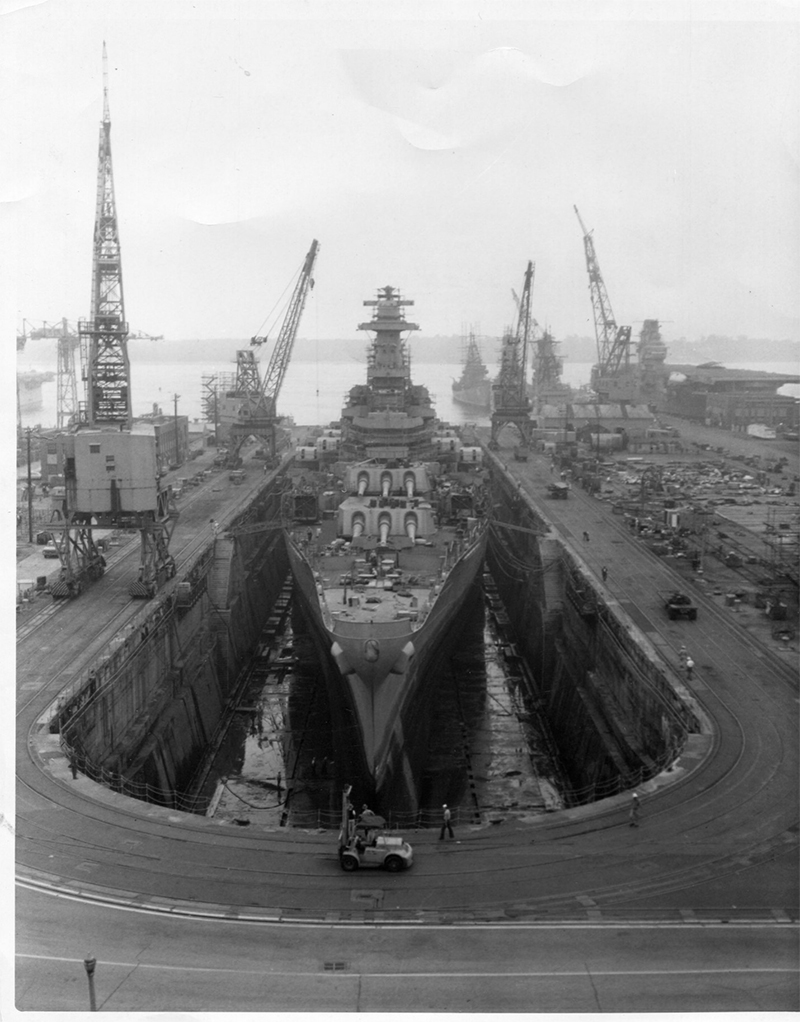
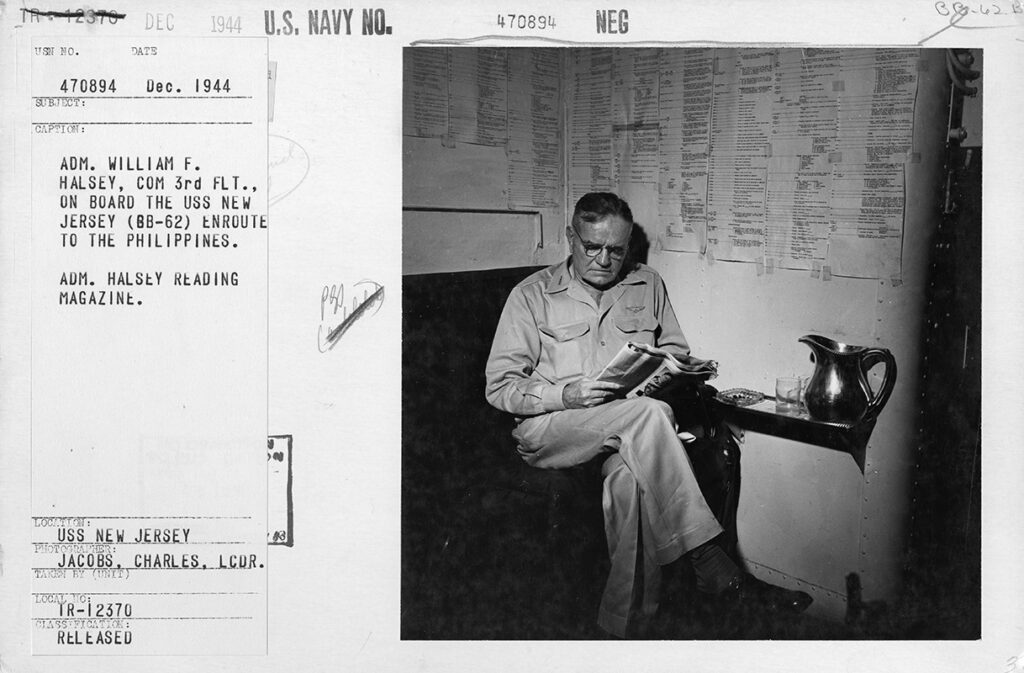
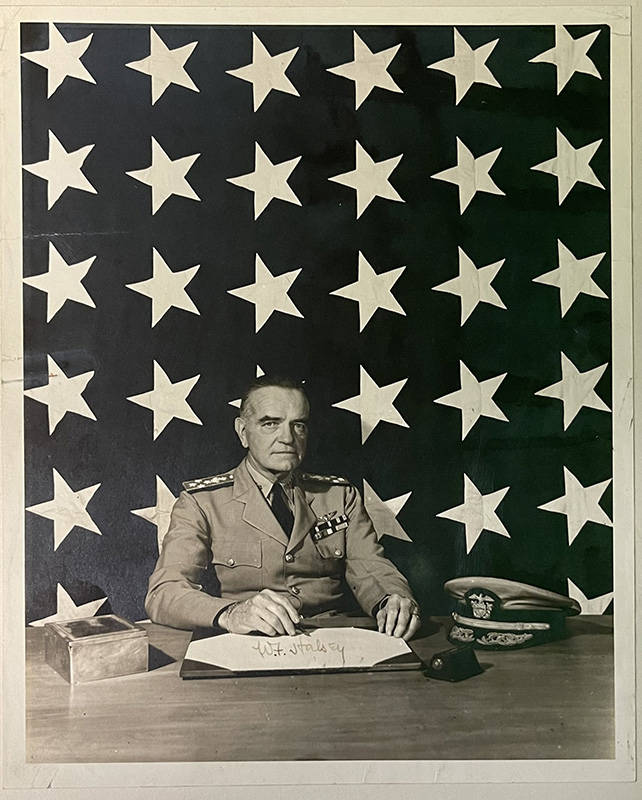
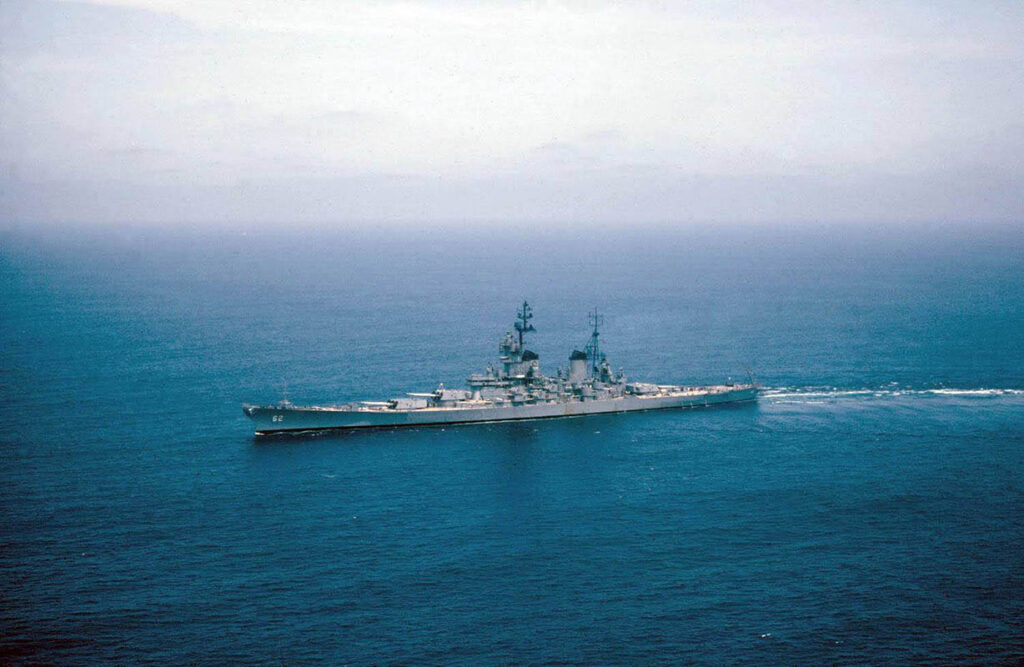
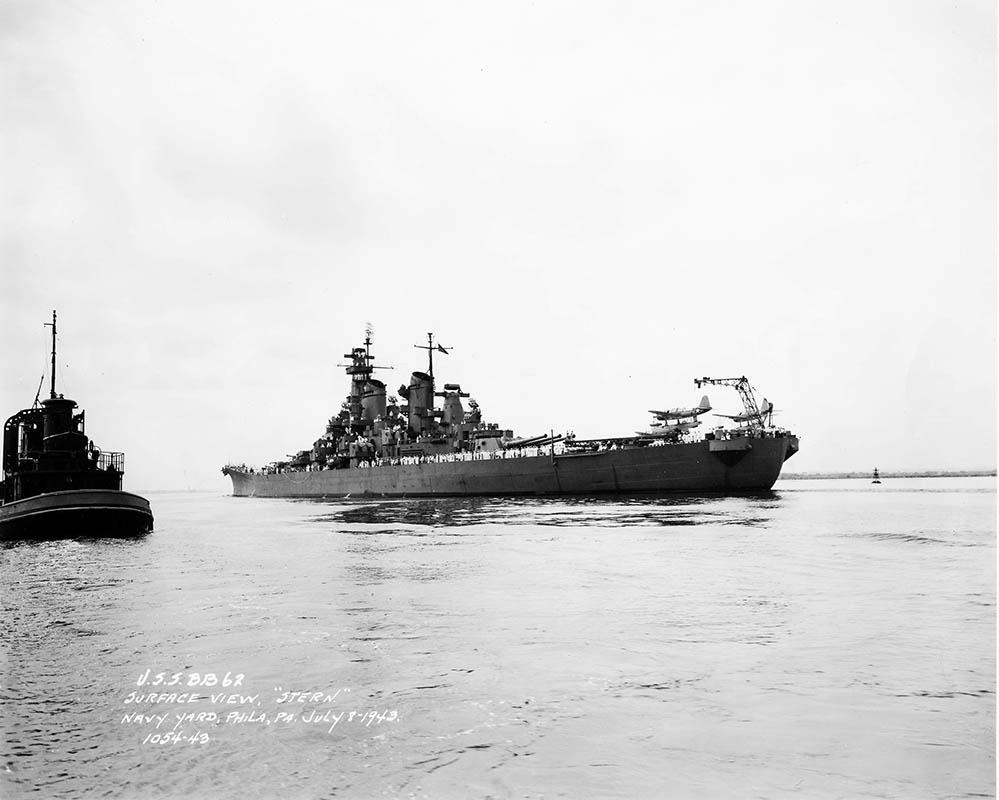
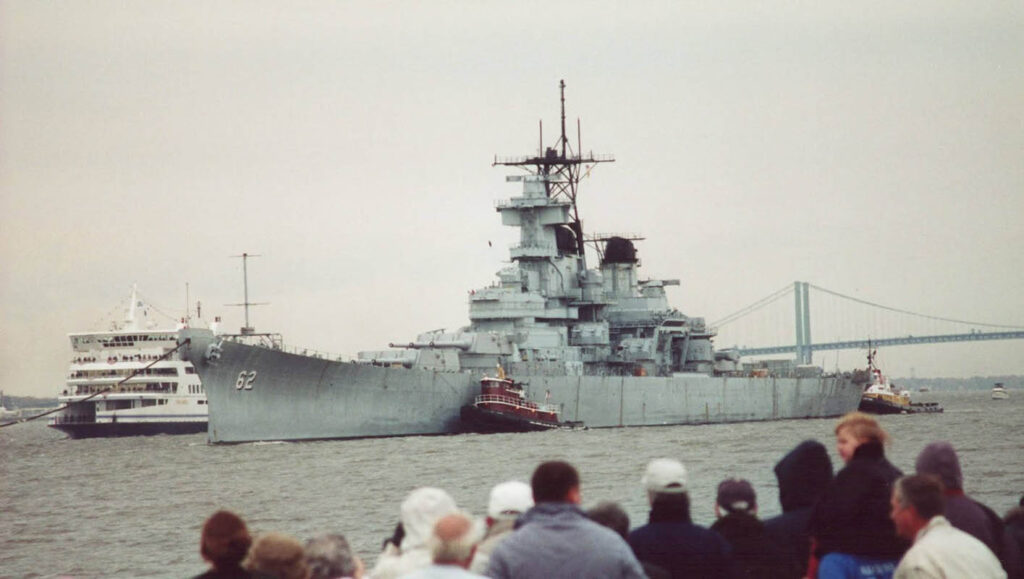
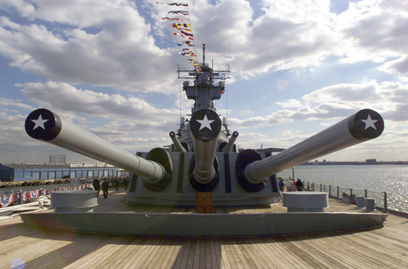
Meanwhile, on May 27, 1945, Admiral Spruance yielded command of the main Pacific Fleet to Admiral Halsey, who was told his flagship would be Missouri. Halsey later related: “I was sorry not to have the New Jersey again, but she was in overhaul.”
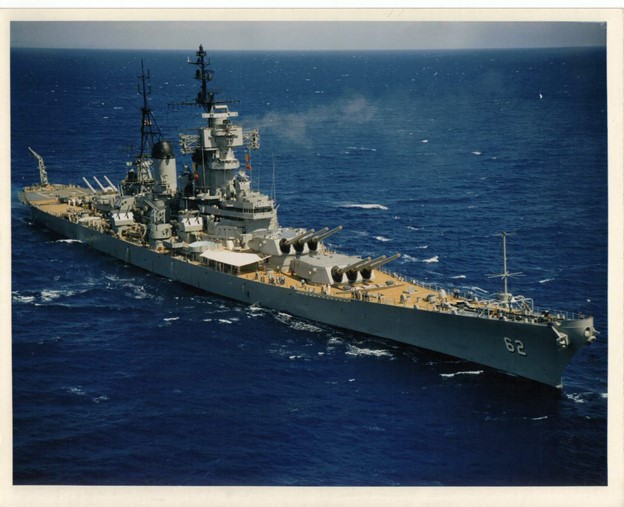
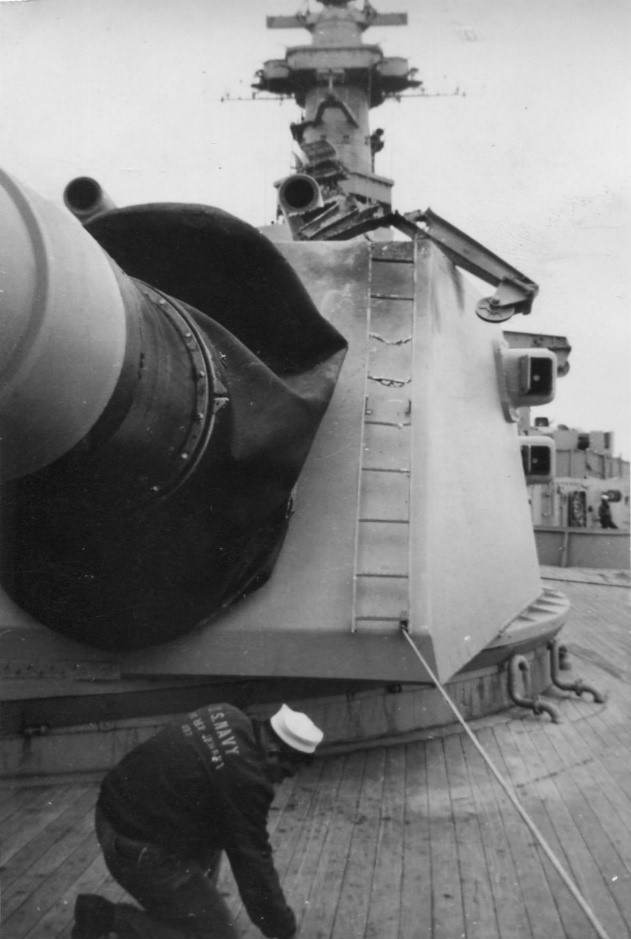
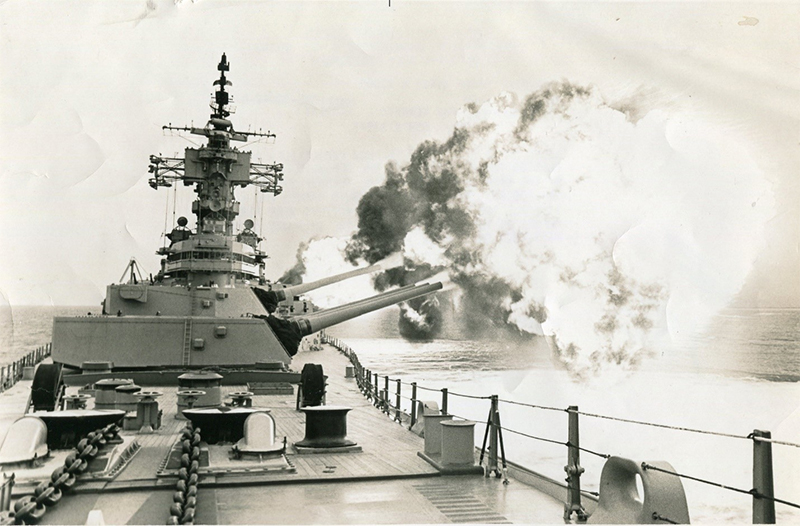
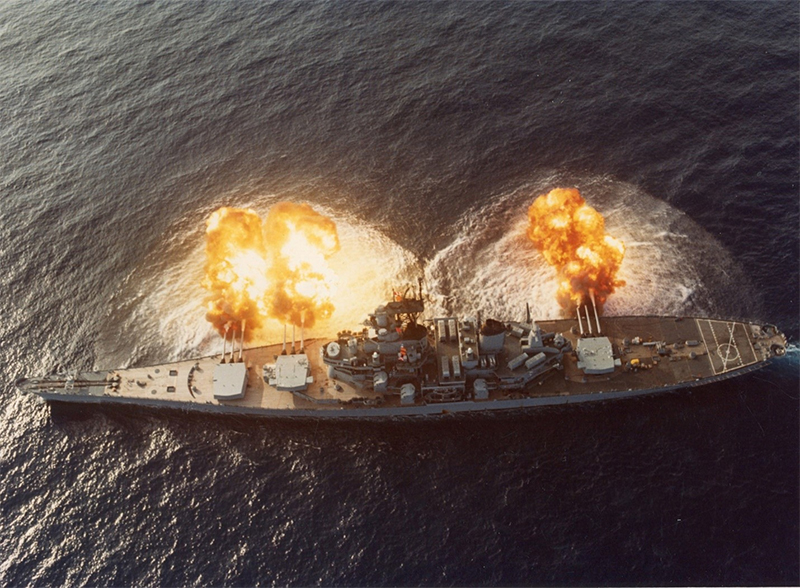
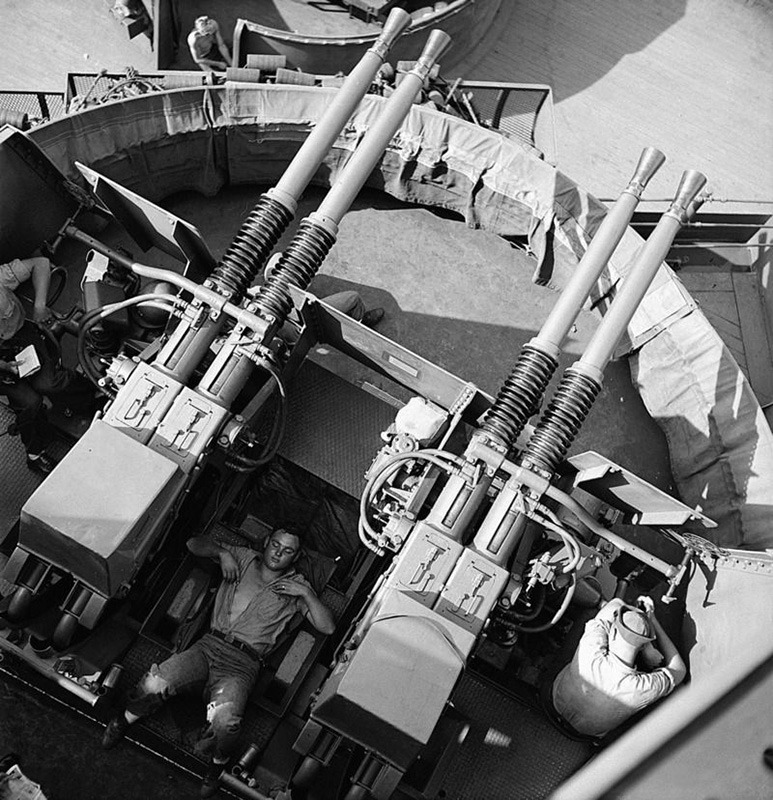
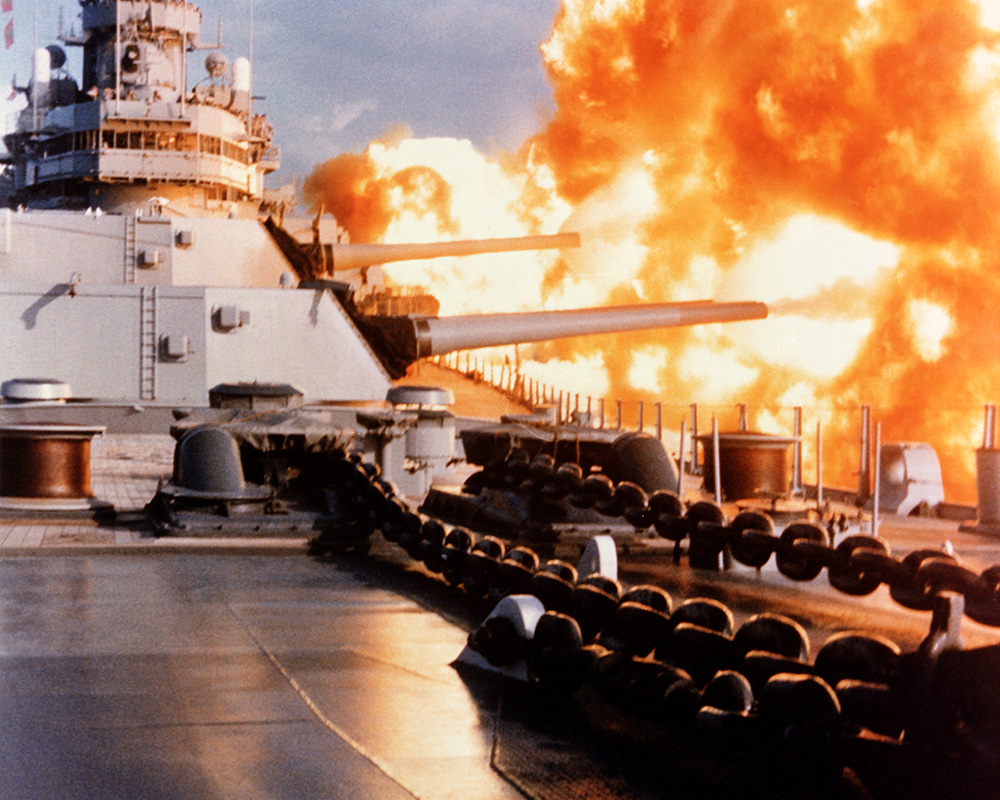
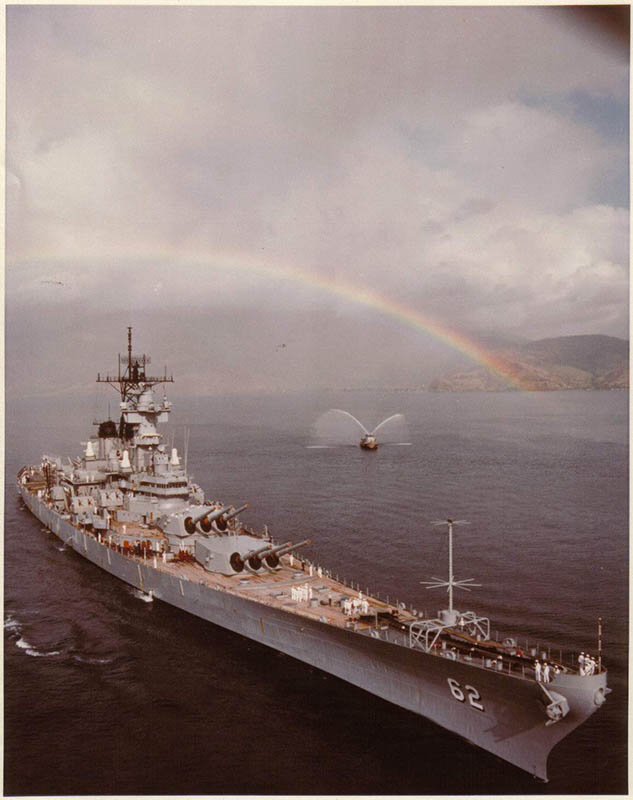
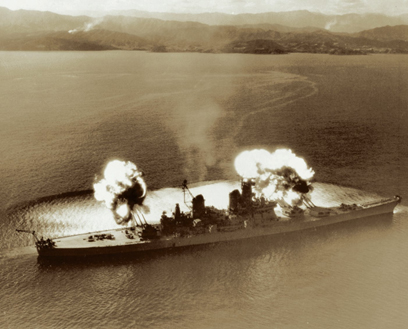
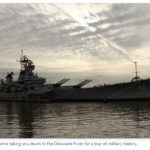
USS New Jersey sailed from Bremerton on June 30, 1945. After sea trials off California and drills off Pearl Harbor, she headed back to the war on August 2. On August 8, the New Jersey used her 16-inch and 5-inch guns to bombard Wake Island, captured after a heroic defense by the Marines in 1941. The Japanese returned fire but missed. The New Jersey sailed on to Eniwetok and then Guam – some of the many islands the New Jersey helped recapture. At Guam, Admirals Nimitz and Spruance conferred about the planned invasion of Japan’s Home Islands.
On August 14, 1945, USS New Jersey again became the flagship of Admiral Spruance and the Fifth Fleet for the November invasion of Kyushu. That day, however, the Japanese agreed to capitulate. Japan surrendered only after the destruction of Japan’s fleet in battles in which the New Jersey participated, and – from Marianas bases the New Jersey helped seize – the final submarine campaign that annihilated Japan’s merchant marine and the conventional and atomic bombing attacks that devastated Japan’s cities and industry. Thus, ended World War II and the largest naval war in history, in which the New Jersey had a leading role.
As the Fifth Fleet flagship, USS New Jersey was a frontrunner to be the site for the Japanese surrender. However, the Missouri, named after President Truman’s home state and christened by his daughter, was chosen instead. The New Jersey carried Admiral Spruance to devastated Manila on August 20, 1945, where he conferred with General MacArthur about the upcoming occupation of Japan. On August 30, the New Jersey brought Spruance to Okinawa, where he and Fifth Fleet kept a watchful eye on Japanese forces until their surrender to MacArthur on Missouri on September 2.
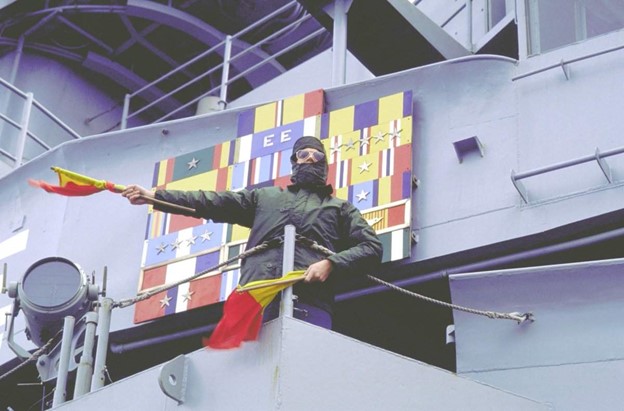
USS New Jersey steamed 200,000 miles during the war. She earned the following commendations: World War II Victory Medal; Navy Occupation Service Medal; Philippine Republic Presidential Unit Citation; America Defense Service Ribbon; and the Asiatic Pacific Campaign Ribbon with nine battle stars – 1. Asiatic Pacific Raids, 2. Hollandia Operations, 3. Marianas Operations, 4. West Caroline Operations, 5. Marshall Island Operations, 6. Leyte Operations, 7. Luzon Operations, 8. Iwo Jima Operations, and 9. Okinawa Operations.
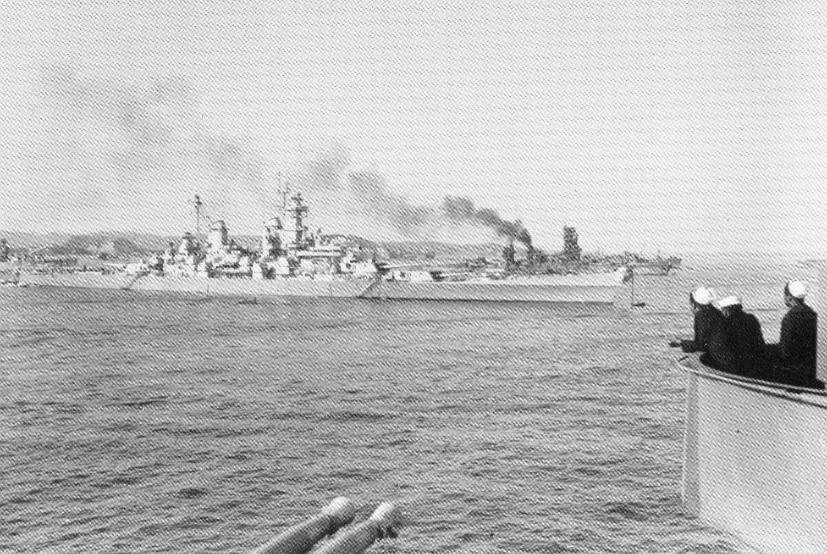
Admiral Spruance and USS New Jersey arrived in Tokyo Bay on September 17, 1945. The New Jersey was the first flagship for the occupation of Japan. From the New Jersey, Spruance commanded all naval forces in Japanese waters. There, he supervised the landing of General MacArthur’s occupation Army, repatriation of Allied prisoners and surrendering Japanese garrisons, and the sweeping of many mines laid in Japanese waters. The New Jersey was Spruance’s last seagoing assignment.
On November 8, 1945, USS New Jersey became the flagship of Admiral John H. Towers, who had helped pioneer naval aviation. Both Spruance and Towers went on to command the Pacific Fleet. On January 18, 1946, the New Jersey became the flagship of Admiral Frederick C. Sherman, who had commanded carriers in battles from Coral Sea to Leyte Gulf.
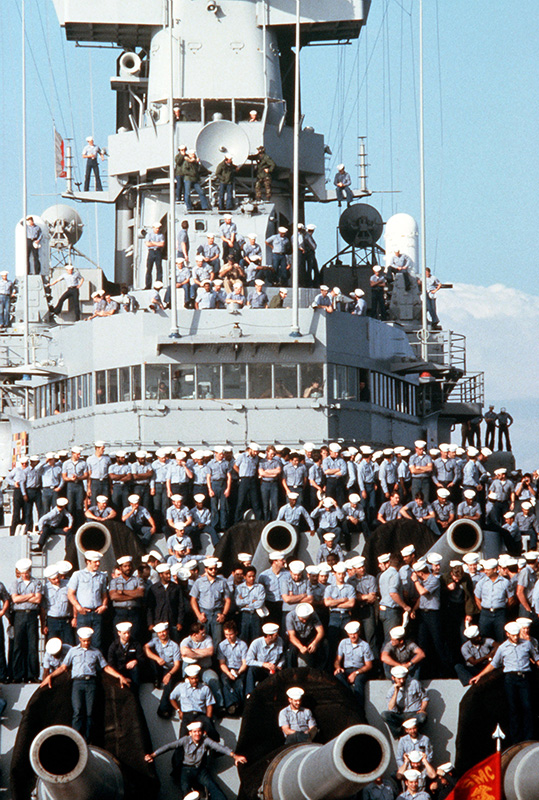
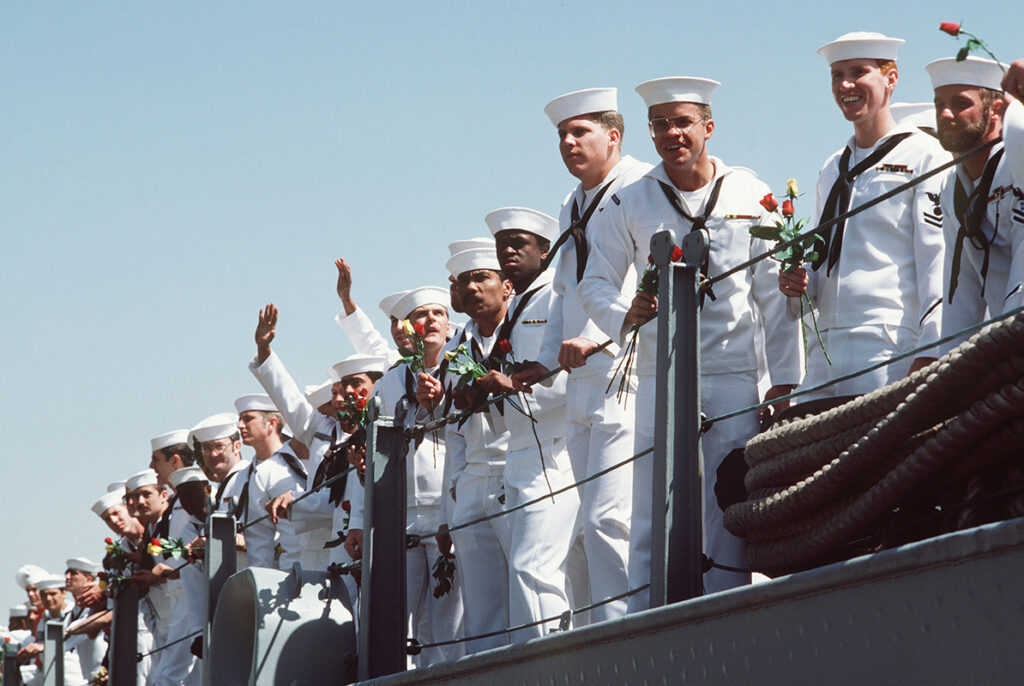
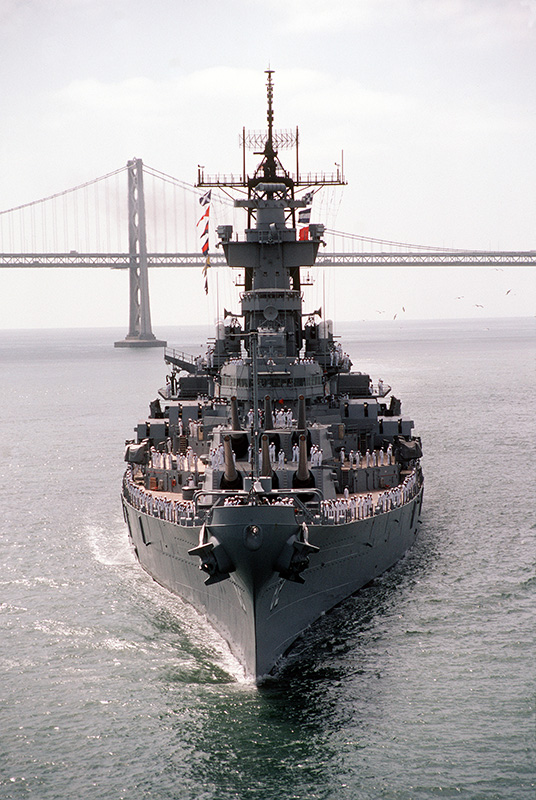
On January 28, 1946, USS New Jersey yielded her role as flagship of the Fifth Fleet and the Japanese occupation. The next day, she set sail for home. As part of Operation Magic Carpet, she carried nearly a thousand American troops home, sailing under the Golden Gate Bridge on February 10.
World War II proved the value of the truly fast battleship, but it also showed that the aircraft carrier was now the queen of the seas. Moreover, the destruction of all major hostile surface navies, the coming of peace, and the advent of nuclear weapons reduced the need to maintain the largest fleet in history. U.S. defense spending was drastically reduced, and 90% of the Navy’s ships were decommissioned. As a result, the two Iowa-class battleships under construction (Illinois (BB-65) and Kentucky (BB-66)) were scrapped, and the more powerful but slower Montana-class battleships (BB-67 through BB-71) were never started. After Britain finished a battleship under construction in 1946, no more battleships were built.
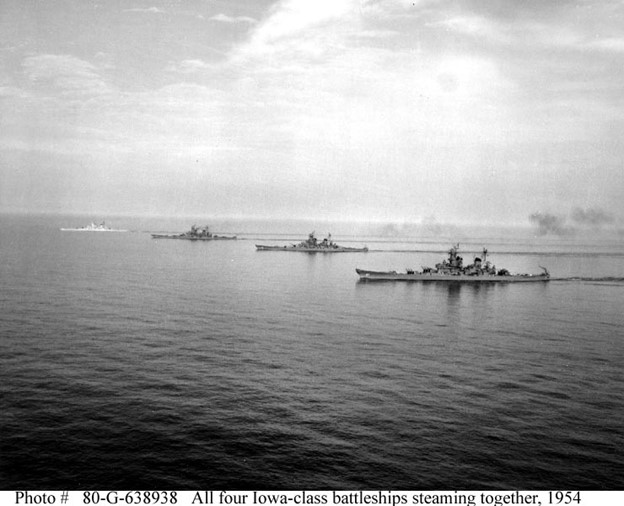
For the same reasons, the 19 slower battleships that fought in World War II were decommissioned by 1947. Most of them were scrapped or expended as targets in atom bomb tests. Even the speedy Iowa-class ships were targeted by the budget-cutters. President Truman ordered Missouri to remain active, but the other three Iowa-class battleships were decommissioned and placed in reserve by March 1949.
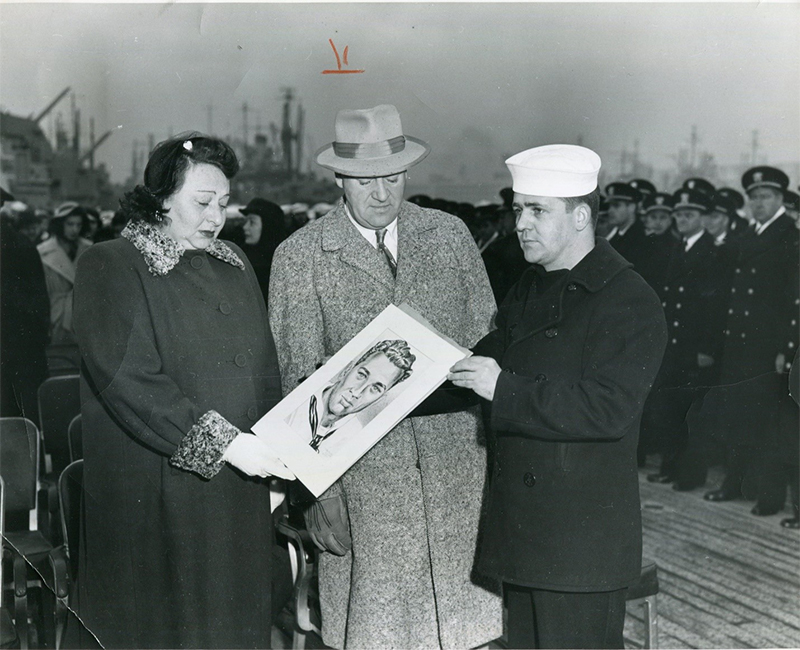
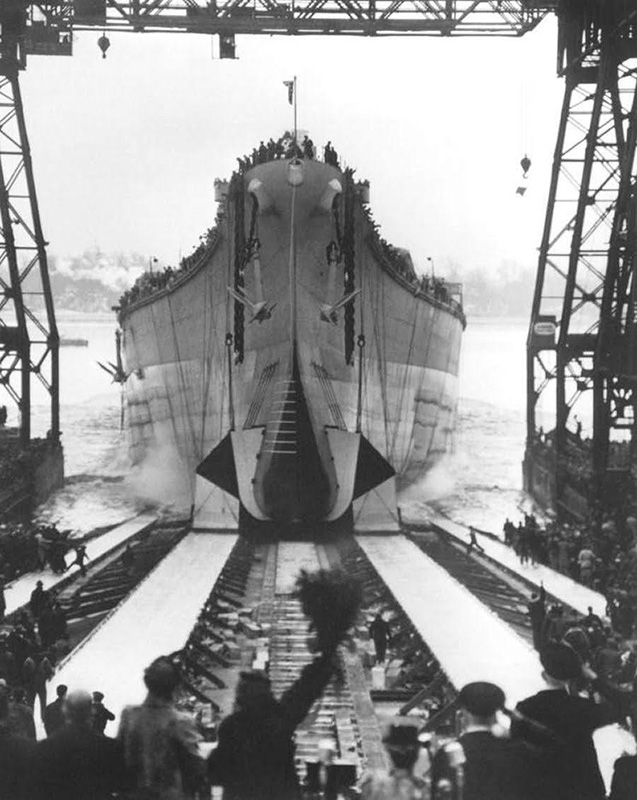
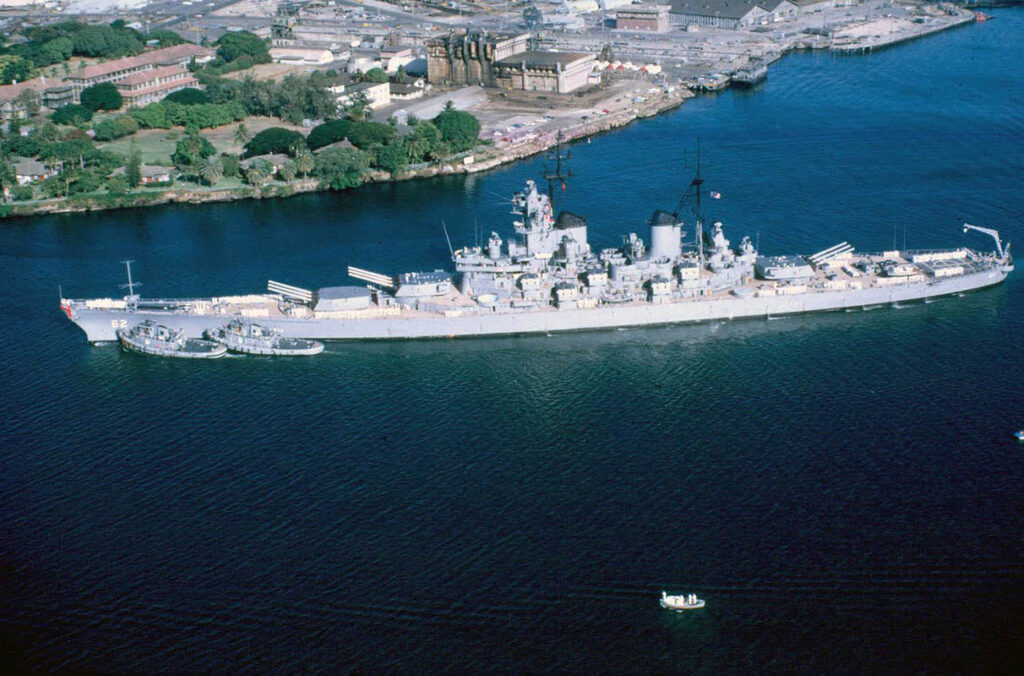
USS New Jersey remained in commission until June 30, 1948. At Long Beach, California, in 1946, she prepared to observe the atomic bomb tests at Bikini atoll, but they went on without her. She was docked at Bremerton until early 1947, when she returned through the Panama Canal to the Atlantic. On May 23, 1947, the New Jersey had a 4th birthday bash in Bayonne, New Jersey, attended by New Jersey Governor Alfred Driscoll and former Governor Walter Edge.
USS New Jersey was selected as to participate in the Navy’s first midshipman training to Europe since 1938. These cruises involved removing some of the ship’s own crew and bringing on board Naval Academy midshipmen to rotate through various departments of the ship and learn various jobs. On June 7, 1947, the New Jersey set off on the training cruise carrying over 500 Naval Academy midshipmen. Arriving in Scotland, the New Jersey was greeted by the British Home Fleet. She became the flagship of the Eastern Atlantic and Mediterranean fleet commanded by Admiral Richard “Close-In” Conolly, who had supported amphibious invasions in the Atlantic and Pacific.
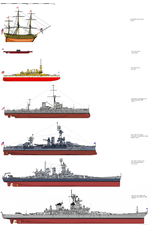
In Norway, USS New Jersey was visited by King Haakon VII and escorted by future King Olav V. In England, members of her crew were entertained by King George VI and the future Queen Elizabeth and Prince Philip. The crew of the New Jersey, flagship of the largest battle at sea in history, visited HMS Victory, flagship of the largest naval battle in the age of sail. After training exercises in the Caribbean, the New Jersey and the midshipmen arrived in New York on August 28.
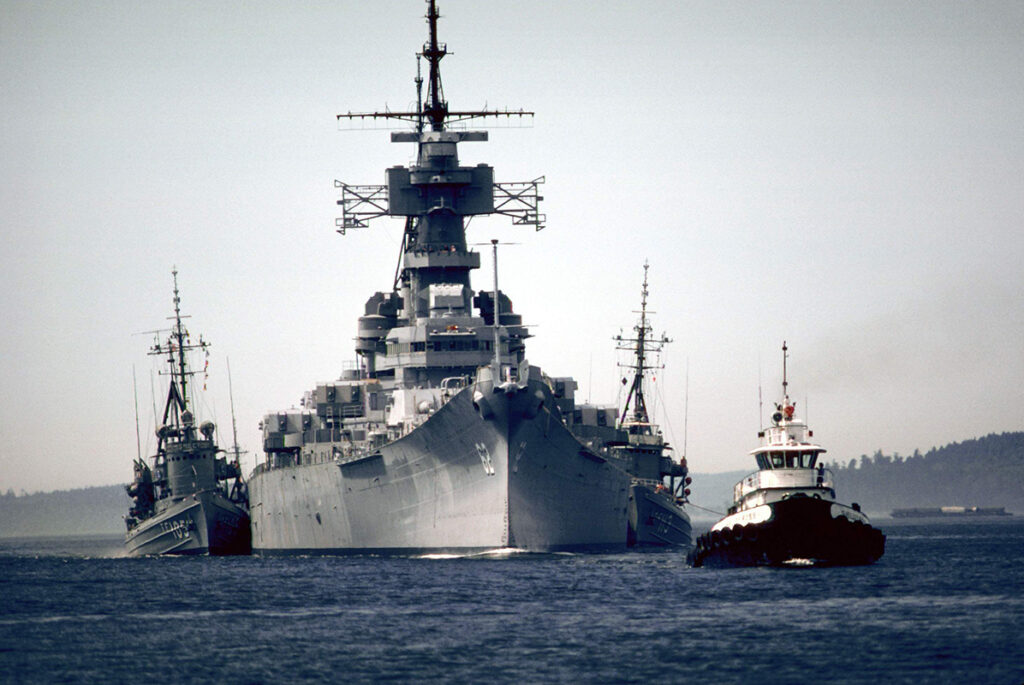
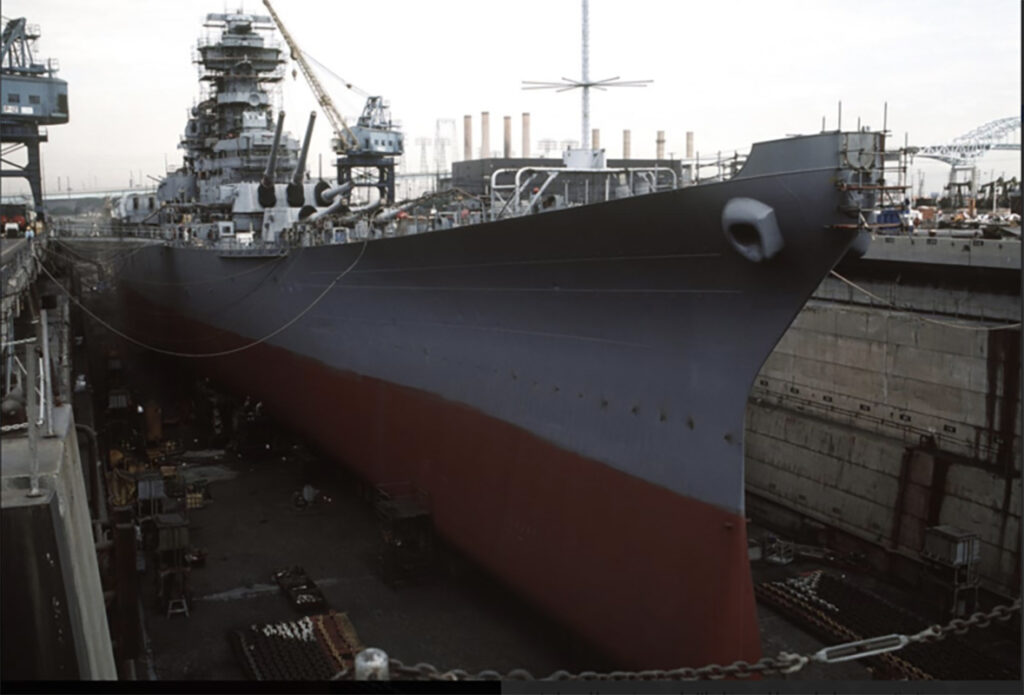
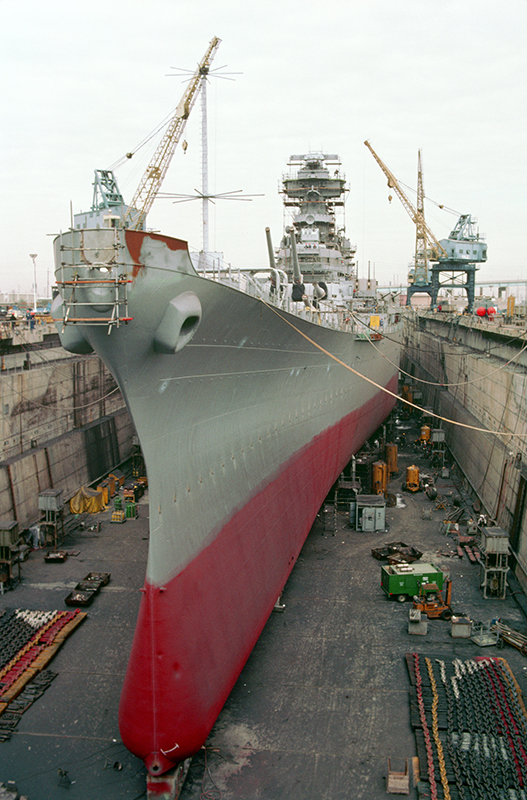
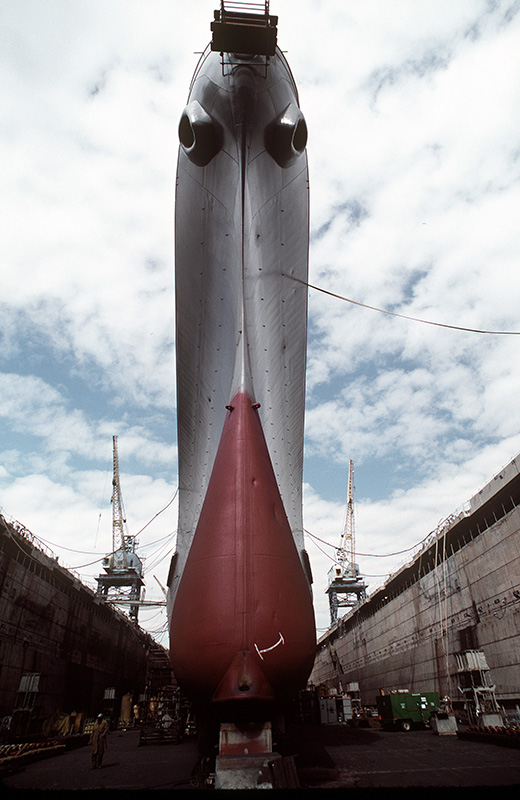
As a new and powerful battleship, USS New Jersey was placed in reserve. To preserve her for possible future use, the Navy began the process popularly known as “mothballing.” The ship was sealed up with dehumidification equipment running inside alongside desiccant packs to prevent mold and water degradation. Equipment was coated with preservative grease like cosmoline, and non-moving parts were preserved under layers of paint.
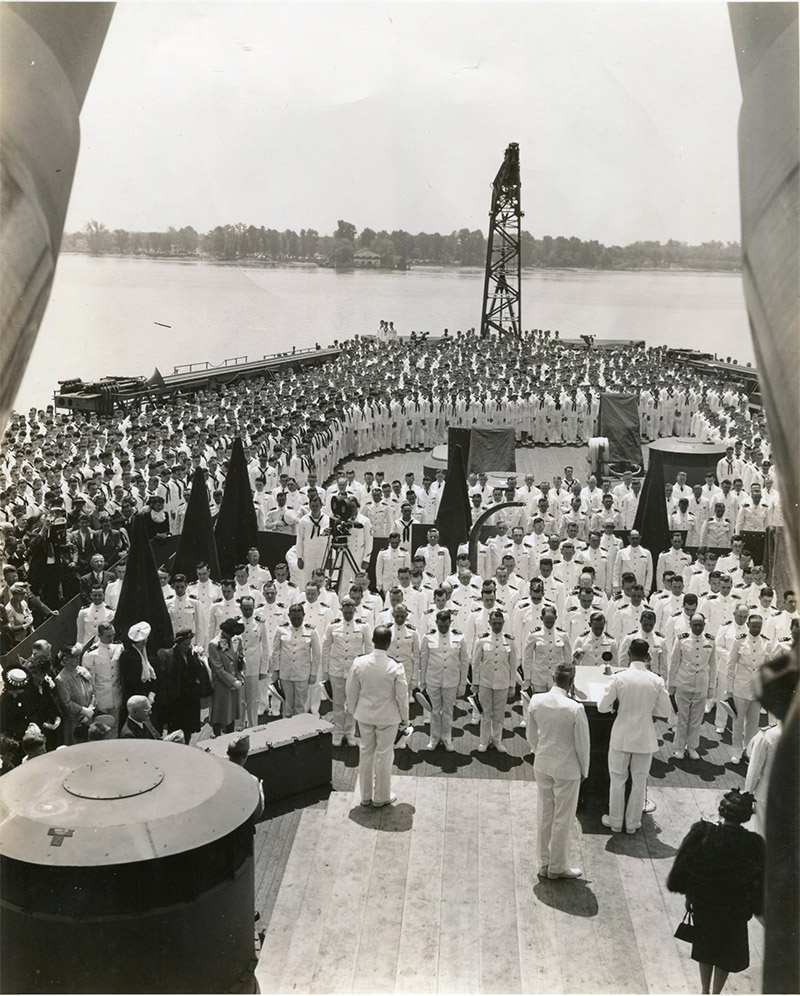
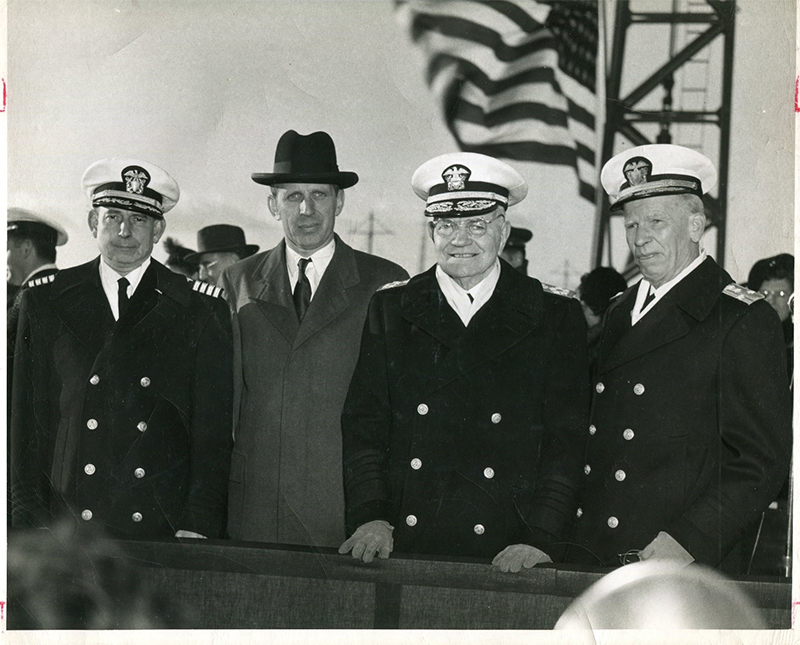
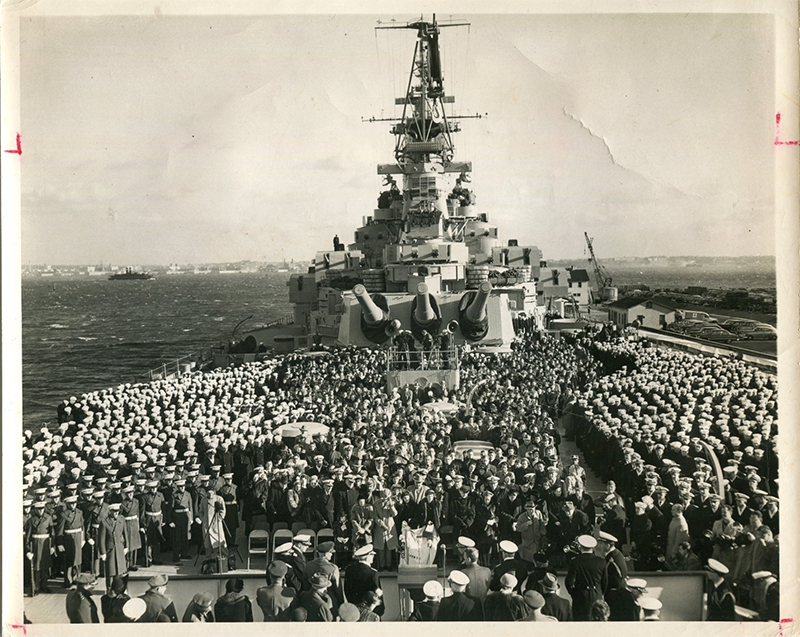
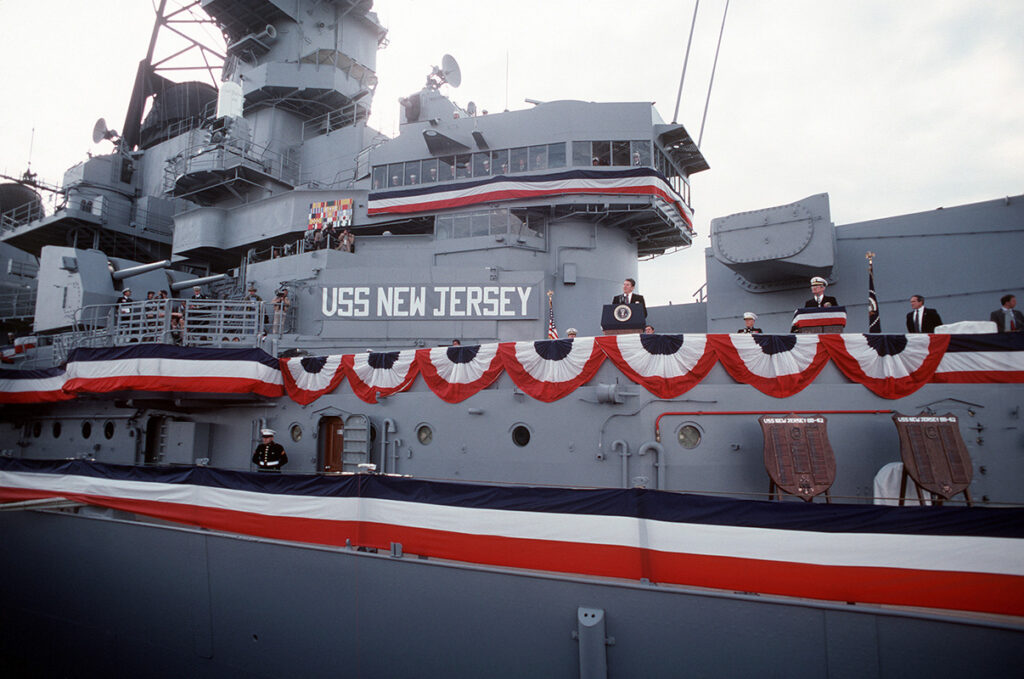
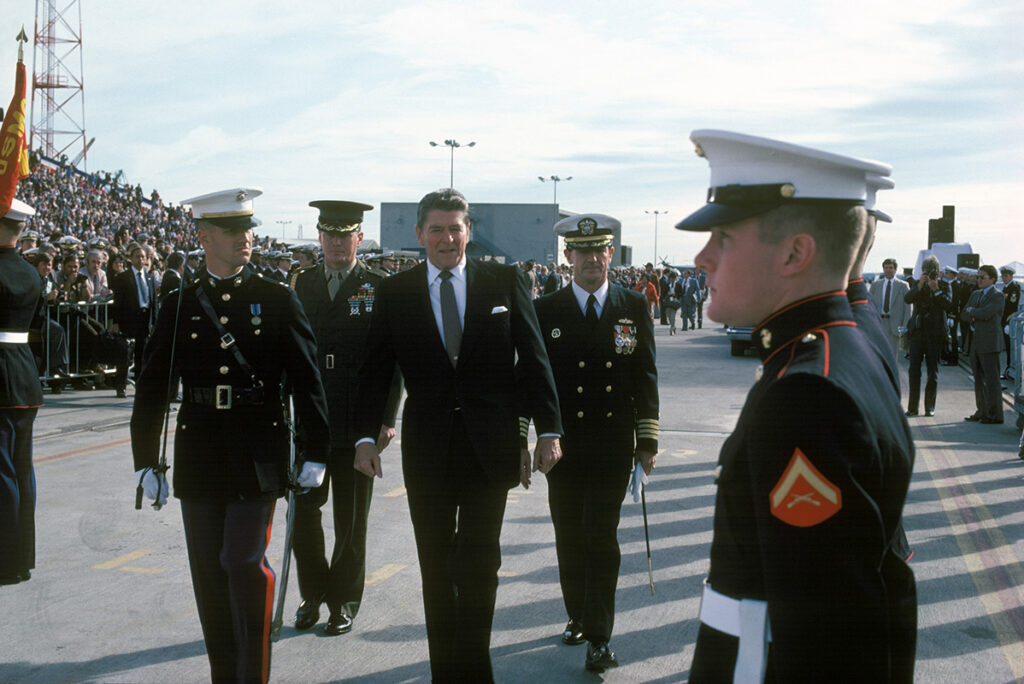
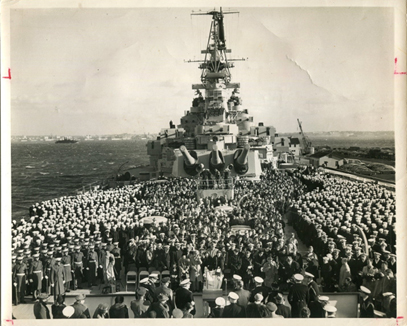
On June 30, 1948, USS New Jersey was decommissioned at Bayonne in a ceremony headed by four-star Admirals H. Kent Hewitt and Thomas Kinkaid, who had led amphibious invasions in the European and Pacific Theaters, respectively. At her decommissioning, the New Jersey’s captain noted: “She has no potential foe worthy of her steel.”